Computational Neuroscience: From Data to Neural Models
Executable tutorials that move from cognitive phenomena and behavioral experiments to data, mathematical models, neural mechanisms, and testable predictions.
15 October 2026
From cognitive phenomena and behavioral experiments to computational models and neural mechanisms.
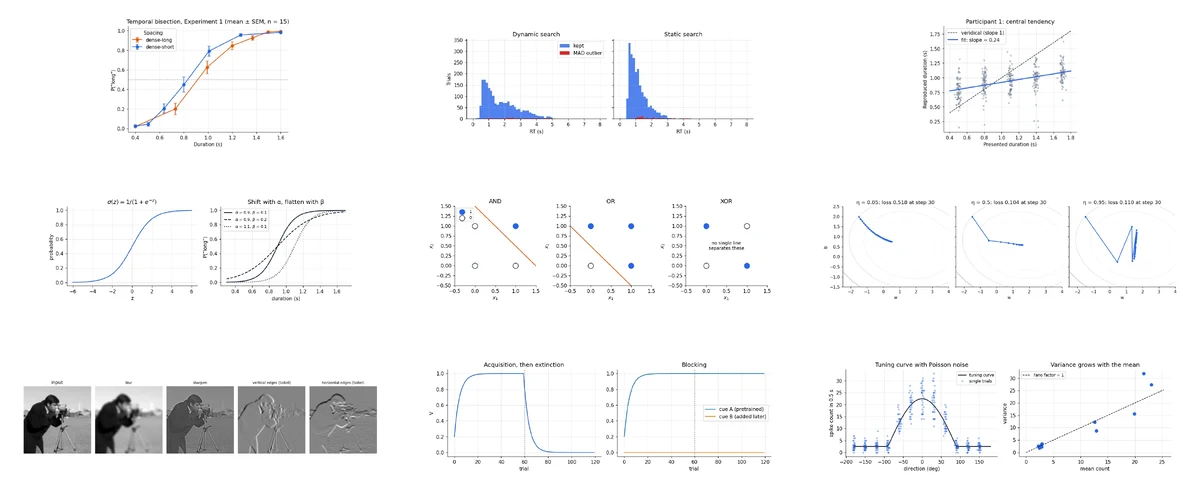
Every tutorial begins with a cognitive or neural phenomenon and asks how it can be measured. We move from the experimental paradigm to the structure visible in the data, introduce the smallest useful model, and then examine possible neural implementations. Code, simulations, and failure cases turn the explanation into a test: what does the model predict, what is it allowed to learn, and what observation would show that it is wrong?
Executable tutorials that move from cognitive phenomena and behavioral experiments to data, mathematical models, neural mechanisms, and testable predictions.
15 October 2026
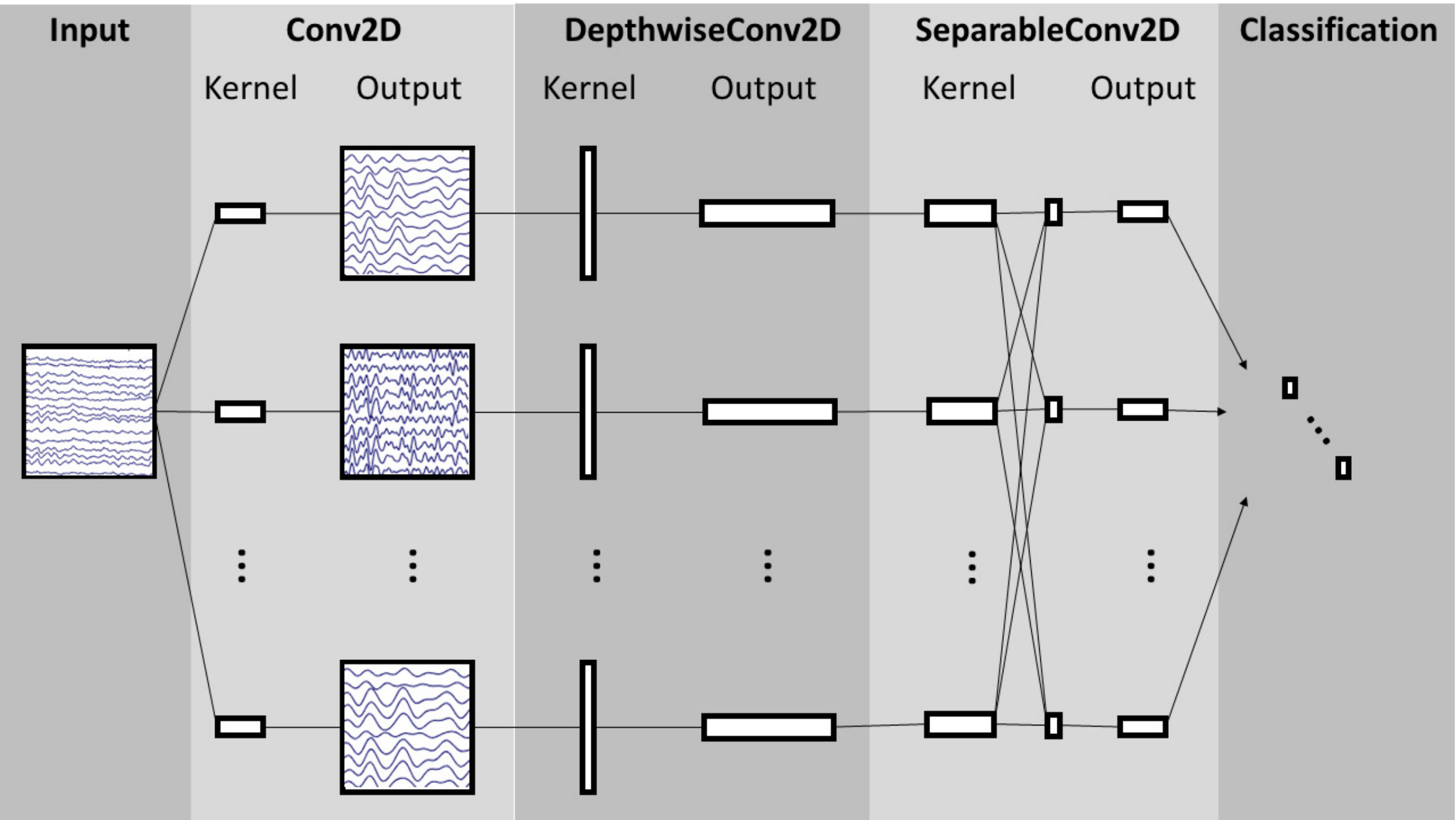
Figure 1 from Lawhern et al. (2018), EEGNet
How temporal, spatial, depthwise, and separable convolutions create a compact baseline for motor-imagery EEG.
15 October 2026
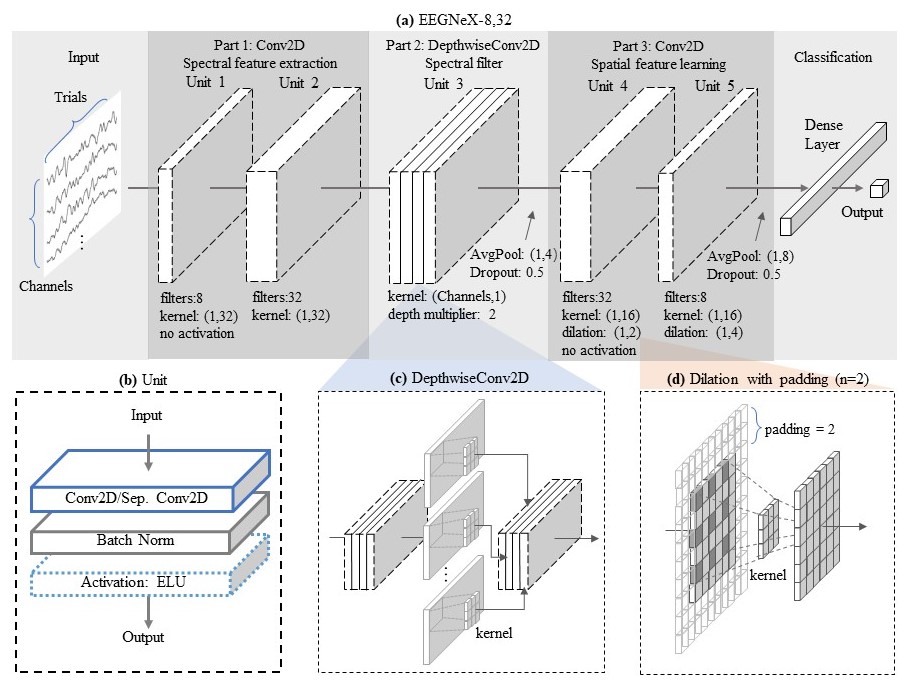
Figure 4 from Chen et al., EEGNeX
Dilated depthwise convolutions extend EEGNet’s temporal field without a proportional increase in parameters.
15 October 2026
Architecture figure from Ingolfsson et al., EEG-TCNet
An EEGNet-style front end followed by a dilated temporal convolutional network for long-range dependencies.
15 October 2026
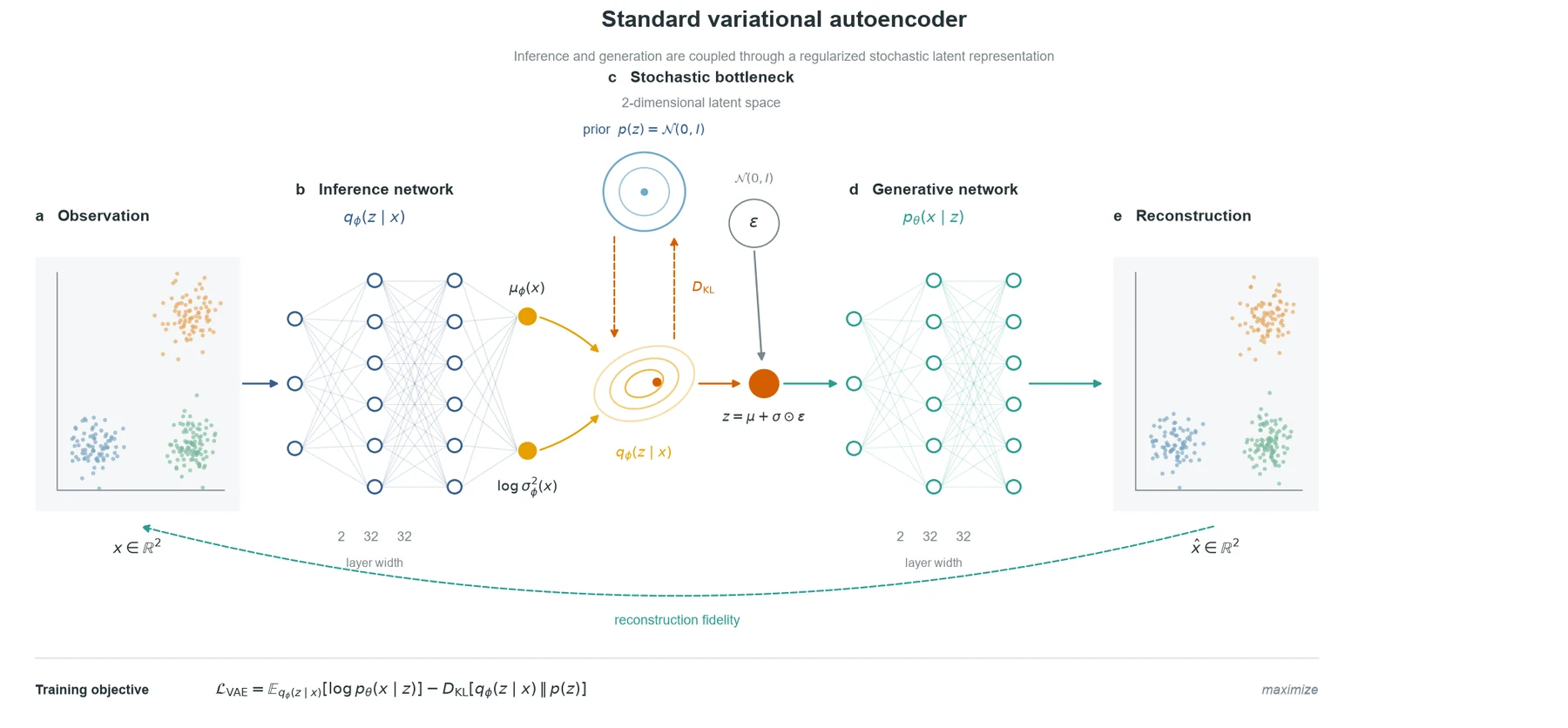
Eleven notebooks that run from tensors and gradients to sequential VAEs and interpretable nonlinear dynamics, a walkthrough of the models, the figures they produce, and what each one adds.
22 September 2026