Where does the previous duration leave its trace?
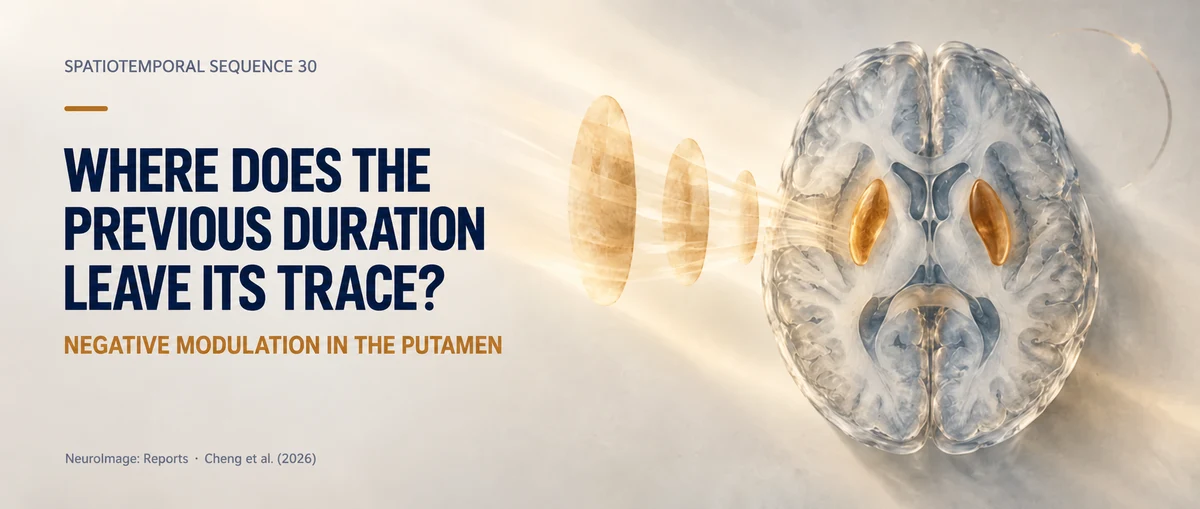
Duration and direction carried different histories in the same moving-dot stimulus. In 27 participants, previous duration negatively modulated bilateral putamen activity.
27 September 2026

Readings on time, space, memory, decision, neural dynamics, and cognitive maps.
Duration and direction carried different histories in the same moving-dot stimulus. In 27 participants, previous duration negatively modulated bilateral putamen activity.
27 September 2026

A duration experiment separates how strongly past experience enters the present estimate from how strongly the latest sensation rewrites the next prior.
26 September 2026
The insula, supplementary motor area, heartbeat signals, and bodily dynamics all correlate with timing. The harder question is what role the body plays in the computation.
25 September 2026
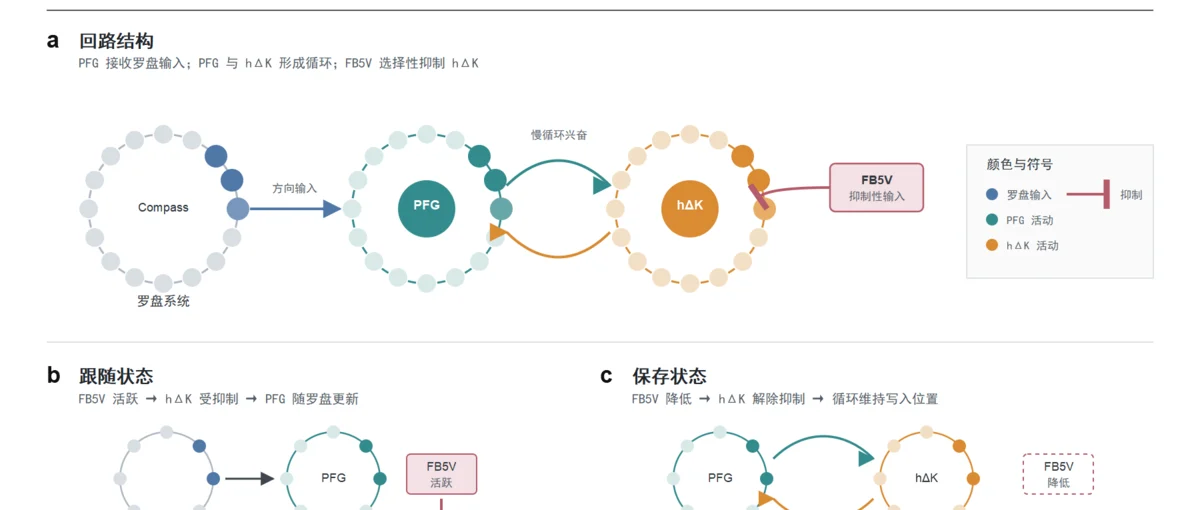
A split attractor follows current heading while a gate is open, then locks one heading into a navigational goal when inhibition is released.
24 September 2026
Behavior, decoded visual representations, and task-trained recurrent networks show how attractor drift and choice feedback jointly reshape a remembered orientation.
23 September 2026
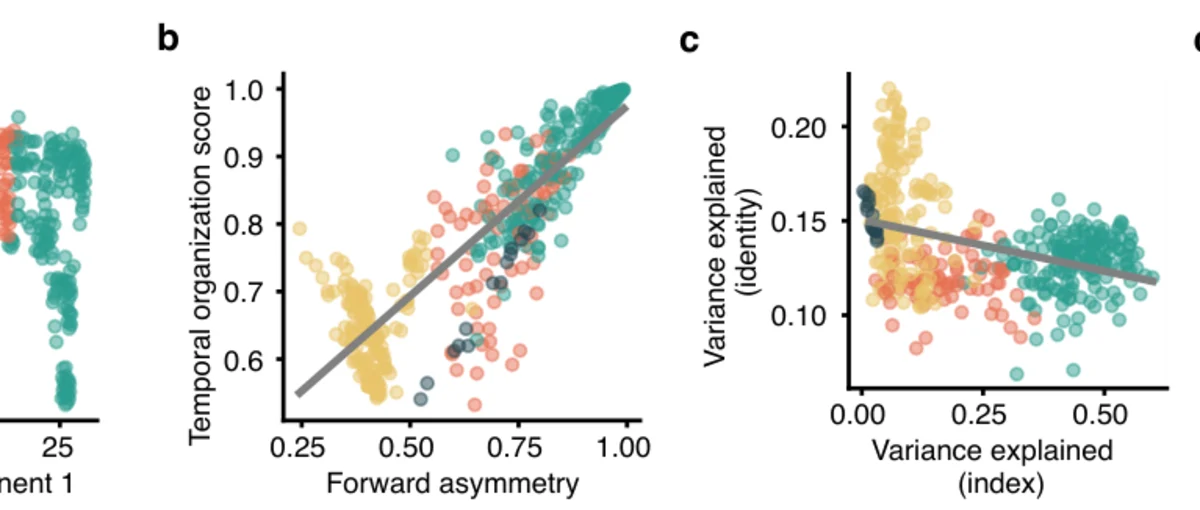
Networks rewarded only for remembering items discover temporal context, reverse chaining, or a memory-palace-like position code.
22 September 2026
Short intervals are often overestimated and long intervals underestimated. A Bayesian account explains this central tendency as calibration under noisy measurement.
18 September 2026
Vision combines disparity, texture, motion, and other cues. A mathematical result shows that statistically optimal cue integration need not preserve Euclidean geometry.
4 August 2026